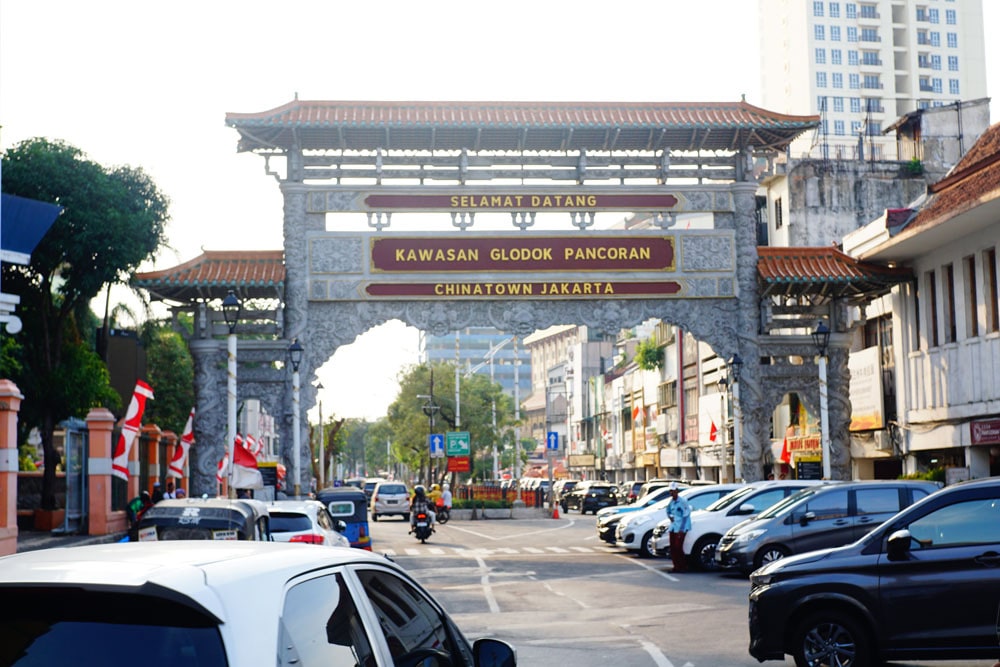
Almost every city contains at least one Chinatown–an enclave of Chinese immigrants that may have initially grown out of discrimination and segregation, but have since developed into thriving centers celebrating Chinese culture. While Chinatowns in the Western imagination may capture Asian identities more broadly, Chinatowns in Asian cities have roots in a long history of the Chinese diaspora.
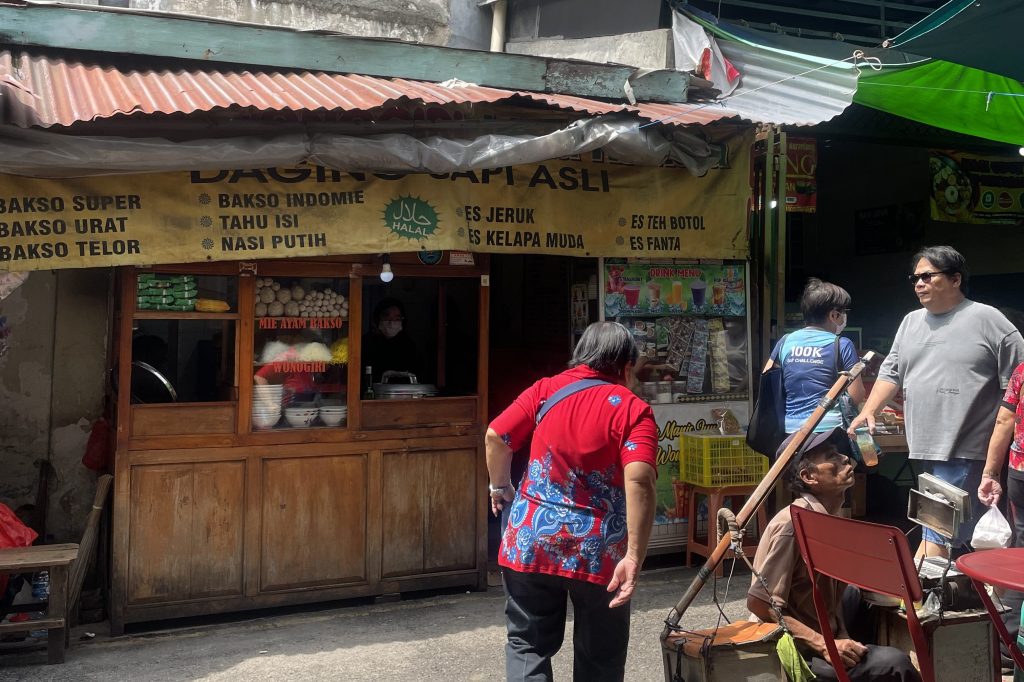
Glodok, Indonesia’s largest Chinatown, is located in West Jakarta and serves as a living, breathing testament to Chinese history in the archipelago. Like other Chinatowns, Glodok offers a glimpse into Chinese culture and history beyond the mainland. It has simultaneously retained the modernity of 21st century China through the arrival of newer immigrants, and has also captured the melange of Chinese and Javanese cultures through the neighborhood’s cuisine and architecture. Walking through the narrow corridors of Glodok, you will find people from Jakarta and elsewhere in the archipelago rubbing shoulders, munching on delicacies, and babbling in Indonesian and Chinese dialects.
The existence of Glodok, however, did not come about naturally as Chinese people immigrated to Java. In the 17th century, the Dutch East India Company (VOC) controlled Batavia (now Jakarta) and during this period of company rule, Chinese migrants saw economic opportunity and consequently moved there to act as economic intermediaries between the Dutch and Javanese. However, increased Chinese migration threatened the VOC, who consequently built a new settlement for immigrants just outside the city walls of Batavia–currently Glodok. In the nineteenth century, immigration from China continued to rise as the Dutch consolidated Java, Kalimantan, Bali, Sumatra, and other islands into a single colonial entity known as the Dutch East Indies.
However, Dutch control of the Indies also introduced and proliferated hierarchies between natives and the Chinese. As the governing power of the islands, the Dutch racialized the population and separated racial groups into castes, with Europeans at the top, “Foreign Orientals” (such as Chinese, Indians, Arabs) just below, and the indigenous population at the bottom. Although the Chinese were granted privileges from the Dutch (such as being educated in Dutch schools), any special treatment could be weaponized against them by attributing misfortune in the Indies to the Chinese population rather than the Dutch colonists. In turn, the deliberate caste system instituted by the Dutch sowed seeds of suspicion and distrust of the Chinese among natives, a sentiment that has reverberated into contemporary Indonesia. And the opposite phenomenon–the Chinese population being wary of natives–also emerged.
Although anti-Chinese sentiment in the 21st century is not as pronounced as it was even two decades ago, the suspicion still remains, even if it is underlying. The Dutch caste system thus placed the Chinese population in a gray zone. On the one hand, the privileges they were given allowed for economic prosperity–many of Indonesia’s wealthiest people are of Chinese descent. On the other hand, as an ethnic minority, Chinese-Indonesians have little political power and have been targeted in riots during periods of economic and political turmoil, such as the May 1998 riots that triggered the end of President Suharto’s 33-year dictatorial rule in the country.
Glodok represents the complexities of old and contemporary Chinese-Indonesian society. While the cultural remnants of Chinese immigrants from centuries past remain potent in the neighborhood’s architecture and cuisine, the blend of people and languages intermingling in the streets is enough to show that cultural integration is possible. What was once an isolated enclave is now a living mosaic, blurring the lines between history and progress.

 The Urban Legend
Leave a comment