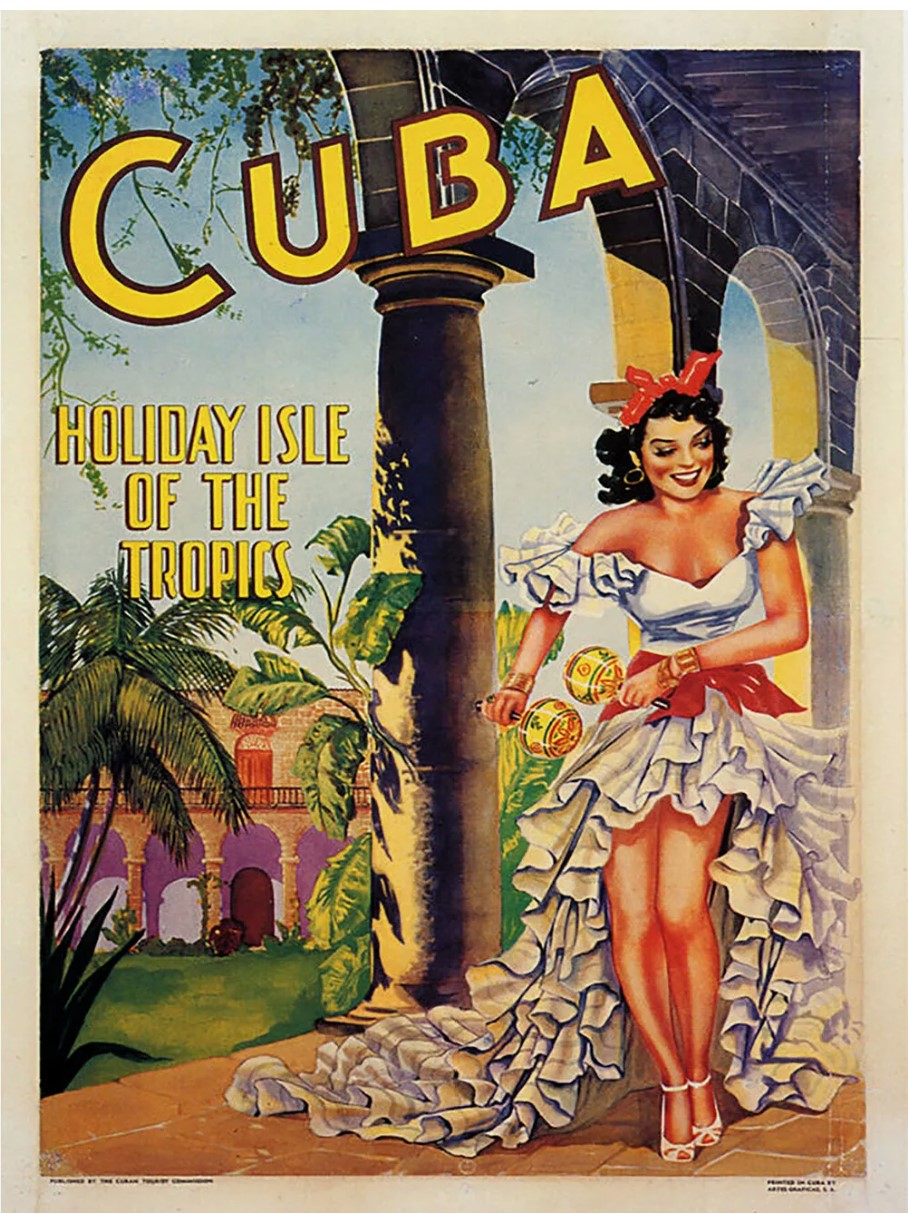
Cuba Holiday Isle of the Tropics, 1949 Lithograph, Library of Congress
This poster advertising visiting Cuba hung in the living room of my childhood home in California for most of my life. I remember as a little kid thinking that it was a painting of my mother matching the woman in the poster with her dark curly hair, rosy cheeks, and warm smile.
This poster was a reproduction of an image originally painted in Gouache in 1949, ten years before Castro came to power in the late 1950s. Reproductions of posters like this occupy a very particular place in the American Art and decor market, where during the cold war hanging a poster like this could be considered supporting a foreign adversary, even if the original market for this print was American tourists, and had no subversive interpretation.
Reproductions of prints like this one found an international audience for the technical prowess demonstrated in the paintings, the flashy style that was typical of advertising during that era, and the subversive nature of representing a foreign government. The popularity of prints like these created a cottage industry in America for prints promoting countries that are typically vilified in American propaganda. The most popular being from the USSR, China, Cuba and Palestine. After the McCarthy era of prosecuting Americans for being “communist sympathizers” and being barred from all public life for having any communist paraphernalia (which could be anything from political books, newspapers, or artworks) there was a cultural backlash once the memory of persecution had faded (in the 1990s to early 2000s) that made objects that were unabashedly supporting what was considered an adversarial government especially popular. i.e. “Soviet Kitsch”. Growing up in the early 2000s in leftist circles seeing posters like these hanging in living rooms of my parents’ friends was not uncommon, and as I grew older having friends who chose to adorn their apartments with such reproductions (or if they were lucky enough, originals) was more and more a regular occurrence. As I saw more of these posters I began to have a particular fascination with the way that women were portrayed in them, and the difference in the role that women occupied in American political posters, ads, and other artistic representations of the time.

American women represented in Pop art, Political ads, 1951 to 1980, via Library of Congress
While reproductions of these posters were often hung in a subversive or even lightly satirical manner in American and European homes, the original history of the production of these posters often was uncritically examined by the European and American consumers of the products. The political poster from 1971 titled “Struggle to Increase the Mechanization of Agriculture” has two different forms, either as a reproduction printed by the European company Media Storehouse, or the original print run from 1971, which was produced in China, and distributed in China in Xinhua (new china) book stores, where party approved materials were available to the public. This print was published during the cultural revolution, a bloody and conflict ridden period of China’s history that valorized the work of peasants and young Maoists forcefully removed authorities who previously held positions of power in cultural institutions, schools, and local government.
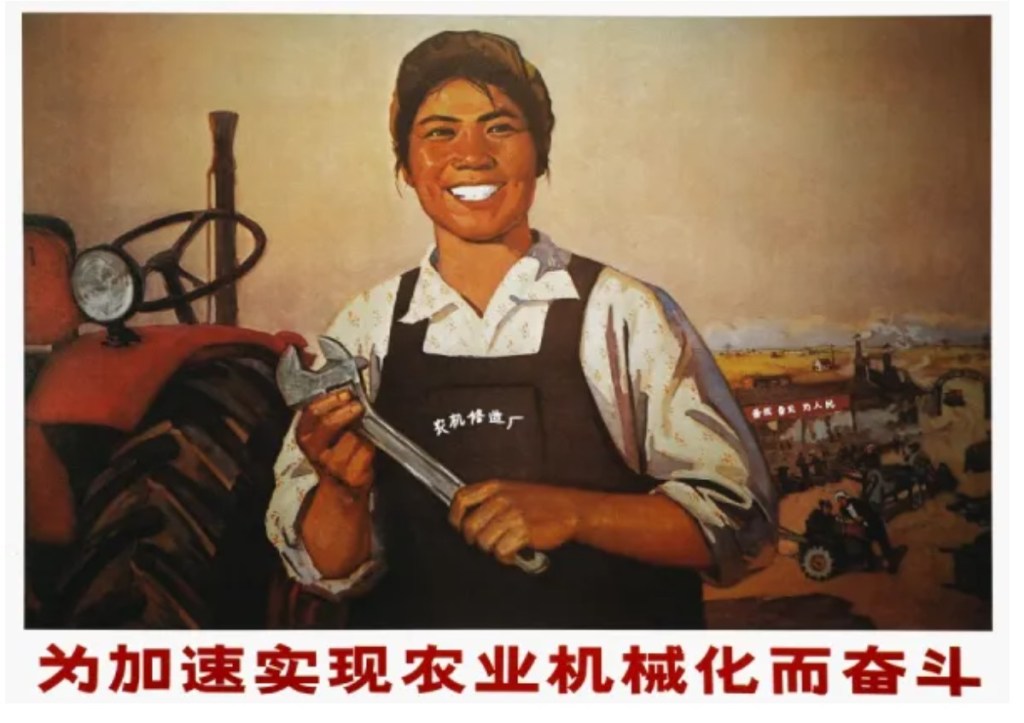
“Struggle to Increase the Mechanization of Agriculture” (1971), via rare historical photos
In its era people rarely collected these posters due to the ubiquitousness with which they appeared in a citizen’s everyday life. These posters were not seen to have a particular value, although some people chose to display them in their homes for decoration, or to show allegiance with the regime. The most successful posters of this period produced by the PCC were the new years posters representing the new year’s baby, and other symbols of good luck and prosperity such as peaches, red, lotus flowers and lucky fish. These posters were notably different from other new years posters as they excluded popular religious or folk symbols (such as San Xing, the gods of happiness, or the He-He twins that represent good fortune), and alluded to some aspects of the policies of the government such as the condos in the second to last poster, or the one child policy as in the last poster; tying the prosperity of the coming year to the policies of the government. These posters were more popular than other posters produced by the government to display within the home due to the obvious seasonal celebratory aspect, and more veiled messaging, as opposed to the more bluntly political posters, which were less popular.
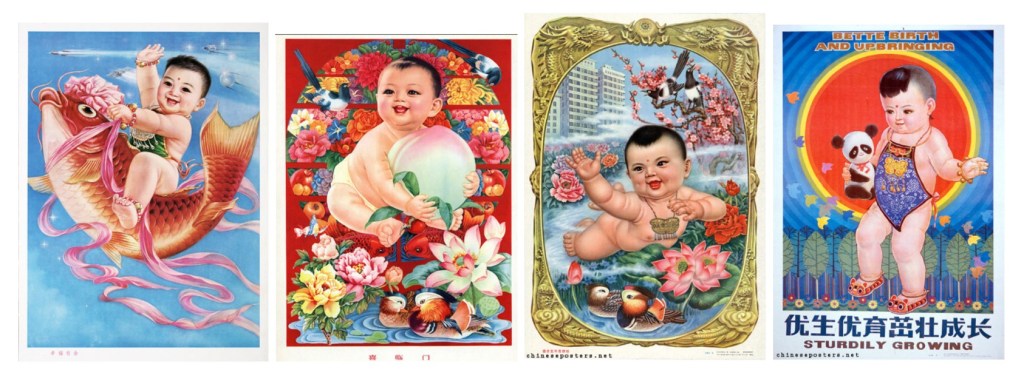
From left to right : “Happiness and Abundance”(1983), “A blessing descends upon the house” (early 1970s), “In the heyday of the year of the dragon, plump babies are born” (1987), “Better birth and upbringing, sturdily growing.”(1986) all via chineseposters.net
These colorful, well designed and artistically crafted decorations were reasonably popular. These posters as well as others created and distributed by the PCC filled in the ideological imagination of the party’s politics, giving citizens an image of what the world “could be” with the party’s influence. This was especially important for creating support with young people and the many people of the working class who were illiterate. This kind of marketing is commonplace in all political societies, where art represents the most aspirational visions of the world, and subtlety or explicitly influences the viewer to associate themselves with the images of a better world represented in them, and by proxy, the most positive image of the governments that produce them. Much like I associated the dancing Cuban woman with my mother being happy in an unknown tropical location, pervasive imagery, while often immediately clocked as being disingenuous, has an ability to slowly reshape the minds of the consumer, directly and indirectly. Art is a powerful tool in the hands of a regime.

 The Urban Legend
Leave a comment